The new Hungarian parliament has amended the Media Act at the initiative of the Tisza Party. In line with a campaign promise by Péter Magyar and his party, the heads of the offices and authorities that have so far governed and regulated the Hungarian media will be recalled, and their successors will be selected through open calls. MTVA and Duna Media Service will be abolished and replaced by new organisations.
The newly established Independent Public Media Council will oversee the independence and financial management of public media. The amendments also establish a Press Fund to support independent Hungarian media.
The Community of Independent Local Papers (The Booth), which currently brings together six rural publishers and eight newsrooms in Hungary, welcomes the changes, their aims and direction. At the same time, we believe that journalism in rural Hungary, and the role and operation of independent local media, cannot be ignored. We therefore issue the following statement.
SITUATION REPORT
For the first time in sixteen years, we have an opportunity to discuss not only the operation of state-funded public media but also the condition of Hungary’s entire public sphere, of which the press of rural Hungary is a crucial part. Journalism in rural Hungary is in crisis in several respects. There are hardly any communities where residents have full access to the reliable, comprehensive news and information that sustain local democracy. In other words, the overwhelming majority of Hungarian society lives in news deserts. This crisis is the result of several factors acting together.
These include the crisis of traditional news media and the disappearance of local news channels, which has dismantled market diversity; the brutal political intervention in news production; the systematic spread of state disinformation; the extreme centralisation of local media funding and its control on party-political grounds; and the use of municipal media as a propaganda service, as we have experienced during the sixteen years of the NER.
The crisis of journalism is particularly serious because, apart from the eight to ten county-seat cities where members of The Booth are present, and a few other smaller and larger towns where an independent local paper or an uncompromising freelance journalist or correspondent still operates, the disappearance of journalistic investigation and reporting has led to a complete loss of oversight over local institutions and local politics, including municipalities, public institutions, local businesses and political parties.
When there is no one to ask questions, investigate what happens to public money or present different opinions, local public life gradually becomes opaque. That is exactly what has happened over the past sixteen years. The consequences are also deeper and social in nature: trust in the media in Hungary has fallen to the lowest level in the European Union, a direct consequence of centrally managed informational chaos. In this situation, it is particularly important that the Media and Mass Communications Act adopted today is concerned not only with the operation of public media but also with the challenges facing the local press.
Independent local media is rare in rural Hungary
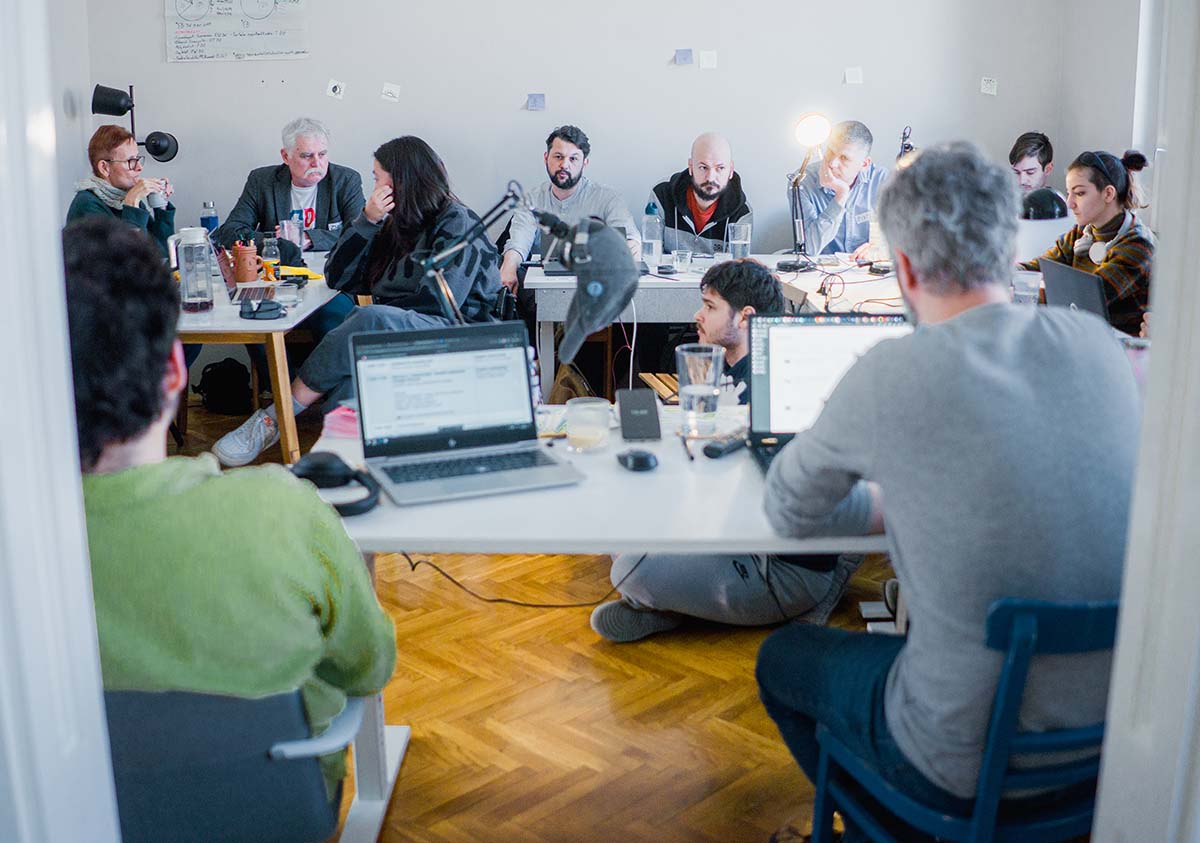
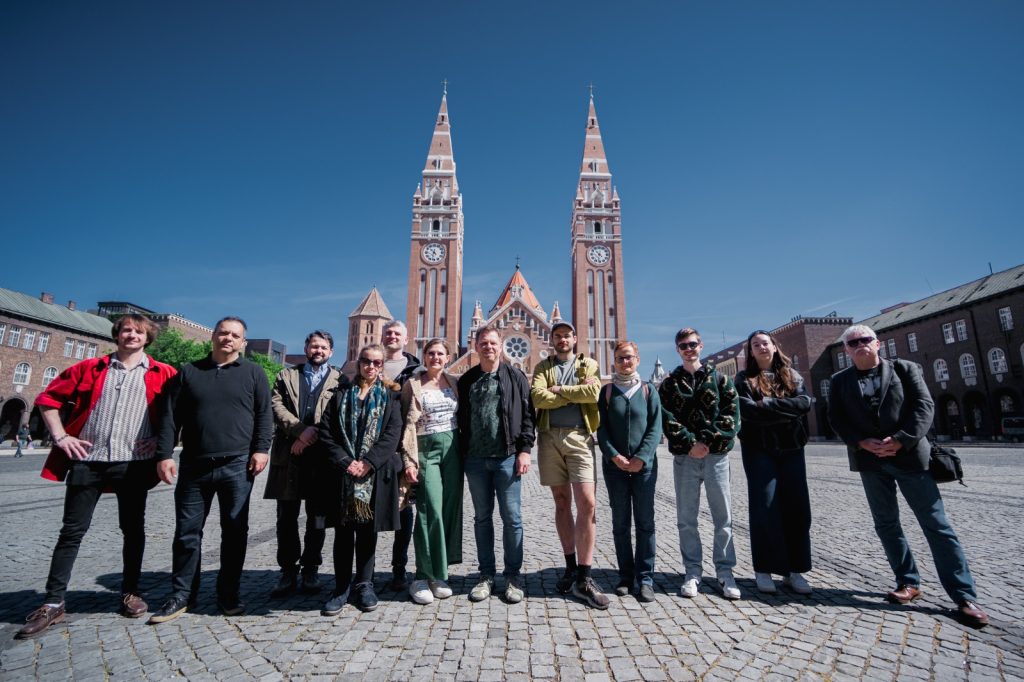
Today, Hungary has barely a dozen independent local newsrooms with their own journalists and publishers. They include the members of The Booth: Borsod24 in Miskolc, Debreciner, KecsUP Hírek in Kecskemét, Szabad Pécs, Szabolcs24 in Nyíregyháza, Szegeder, Szol24 in Szolnok and Veszprém Kukac. Since the Fülke association was founded in 2025, we have been working together to find solutions for building a sustainable local media model in the long term, while continuously developing together.
As small newsrooms, we have survived the past period with enormous difficulty, while the NER eliminated the free advertising market and wiped out the domestic grant opportunities available to critical journalism. We have therefore financed our basic operations primarily through international grants, supplemented to a lesser extent by local community support and subscription systems, and only marginally by market revenues.
In figures: the combined 2025 budget of the eight newsrooms belonging to The Booth barely approaches HUF 200 million. This funds the work of journalists, the small support teams of the publishers and the technical infrastructure essential for operations, even though some newsrooms do not have an office. Yet the current one-sided funding model is no longer sustainable for our continued operation. Our basic operations are not secured even for 2026.
The next generation of journalists is also an unresolved issue, because in such uncertain circumstances fewer and fewer people choose journalism as a profession. Taking all this into account, and despite all the difficulties we have faced, we still reach around 2.5 million people every month directly through our online platforms.
What does the law address – and what does it leave out?
The law passed today speaks about media pluralism, press freedom and independent media. Its explanatory memorandum specifically highlights that the Press Fund will support media outlets producing reliable content and ethical journalism, traditional media services with limited resources, and print and electronic content providers. The law is therefore an important step towards transforming the media system, but from a local perspective it has several important shortcomings.
It contains no separate programme or earmarked funding for the local and regional press, creating a risk that support will primarily go to larger, stronger national players. Nor does it address the problem of news deserts: regions where no independent local media remains and only party propaganda maintained from municipal sources is available, or even that is absent. It can also be read as indicating that the funding system may focus primarily on project financing, while the greatest difficulty for rural newsrooms is often maintaining basic operations, from journalists’ salaries to infrastructure costs.
It remains an open question whether grant evaluations will be public, whether legal remedies will be available and what safeguards will prevent future political or institutional influence. If the genuine aim is to create media pluralism, we must also consider separately the situation of journalism in rural Hungary, which is in crisis.
International examples show that workable models exist. In the Nordic countries, one of the main aims of press-support systems is to sustain outlets that are weaker in the market but important for political and regional diversity because they provide public-interest content. The French model additionally supports research and development to meet the challenges of the digital and ecological transitions, as well as the emergence and support of new players. Austria also operates a press-support system regulated by law, whose goals include not only diversity but also journalist training and encouraging reading. In European countries with such public funds, one criterion for awarding support is precisely the extent to which a newsroom contributes to the diversity of local public life and the functioning of democratic public discourse.
We are partners
The Booth can be a strong, independent and organised channel to rural public life, committed to reliable information, access to news and professional standards. We are therefore ready to take part as partners in the public debate on renewing media services.
As independent newsrooms, we possess practical knowledge of the obstacles facing local journalism, the resources needed for our work and the conditions required to operate sustainable, public-interest local media in the long term.
We support promoting pluralism of opinion, democratic public discourse and the rule of law. We also support applying all the principles set out in the Public Service Charter at local level, including action against fake news and disinformation, factual and wide-ranging reporting, and the promotion of ethical and independent journalism.
We are partners in and have a stake in the smooth functioning of the communications market, the protection of the interests of communications providers and users, and the development of fair and effective competition. We also want to help establish a transparent grant system from the Press Fund for press outlets operating in rural Hungary, based on the standards of ethical journalism.
In our view, the current post-2010 reform of public media cannot end with a merely central institutional reorganisation. One of the most important measures of democratic change will be whether the conditions can be created for media outlets providing reliable information and ethical journalism to operate in the towns and regions where genuine media pluralism has disappeared or been severely weakened over the past fifteen years.
Signatories: Borsod24 in Miskolc, Debreciner, KecsUP Hírek in Kecskemét, Szabad Pécs, Szabolcs24 in Nyíregyháza, Szegeder, Szol24 in Szolnok and Veszprém Kukac