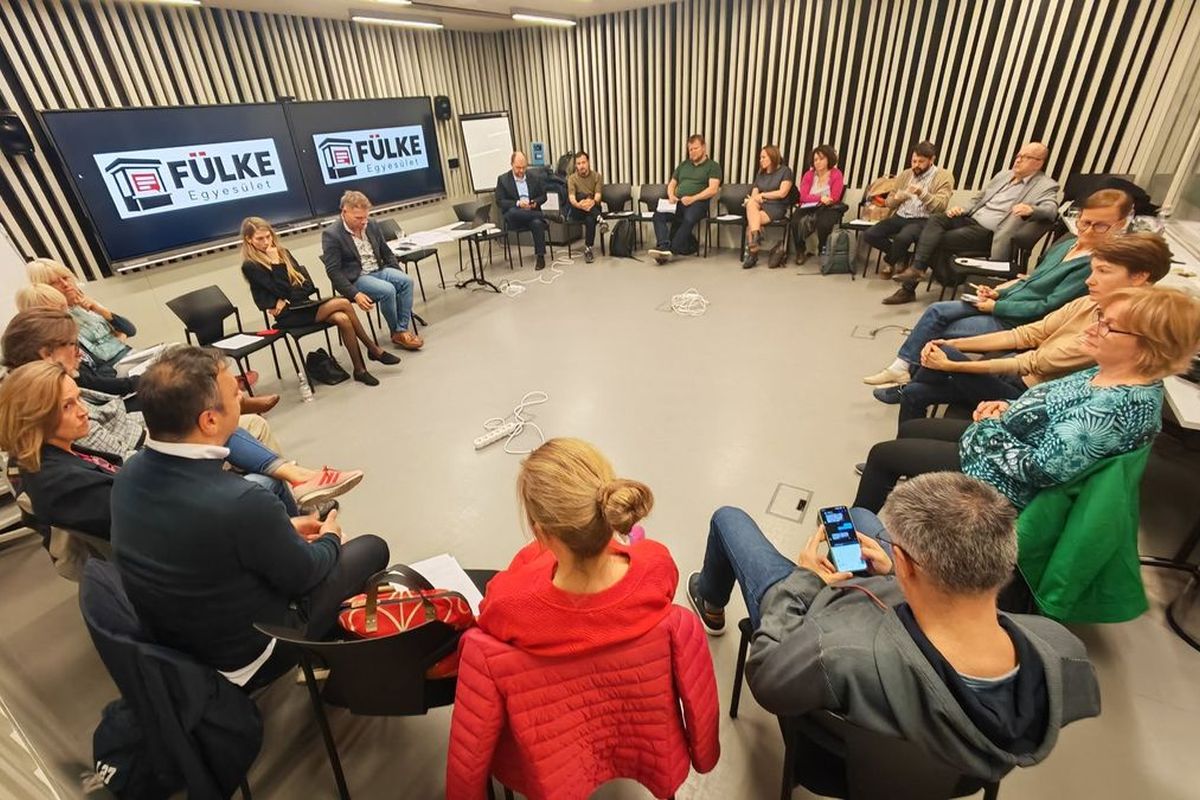
The FÜLKE Association (Community of Independent Local Newspapers) held a conference at Central European University (CEU) to discuss key issues facing the Hungarian media and its future.
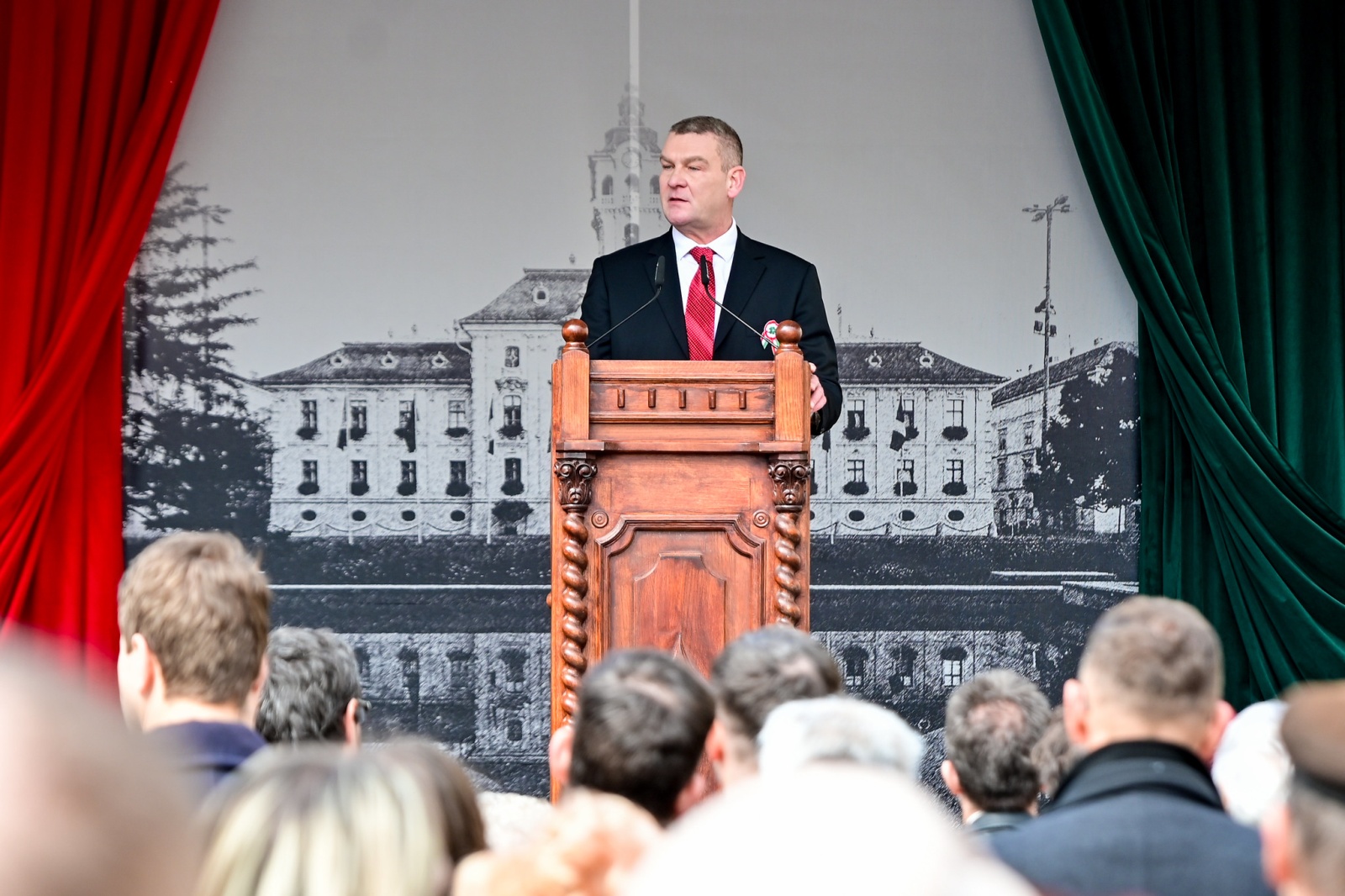
In his opening remarks, FÜLKE President Róbert Alter introduced the association, which was founded in December 2025. Its members are Borsod24, Debreciner, KecsUP Hírek, Szabad Pécs, Szabolcs24, Szol24, Szegeder and Veszprém Kukac.
Norbert Falusi, a journalist at KecsUP, then presented FÜLKE’s comprehensive set of proposals concerning the future and financing of the Hungarian press and media market, as well as the restructuring of public-service media. The proposals include emergency financial support for local newsrooms facing a crisis, measures to tackle news deserts, contributions from global digital platforms to journalism funding, a new approach to county-level newspapers, and cooperation with public-service media.
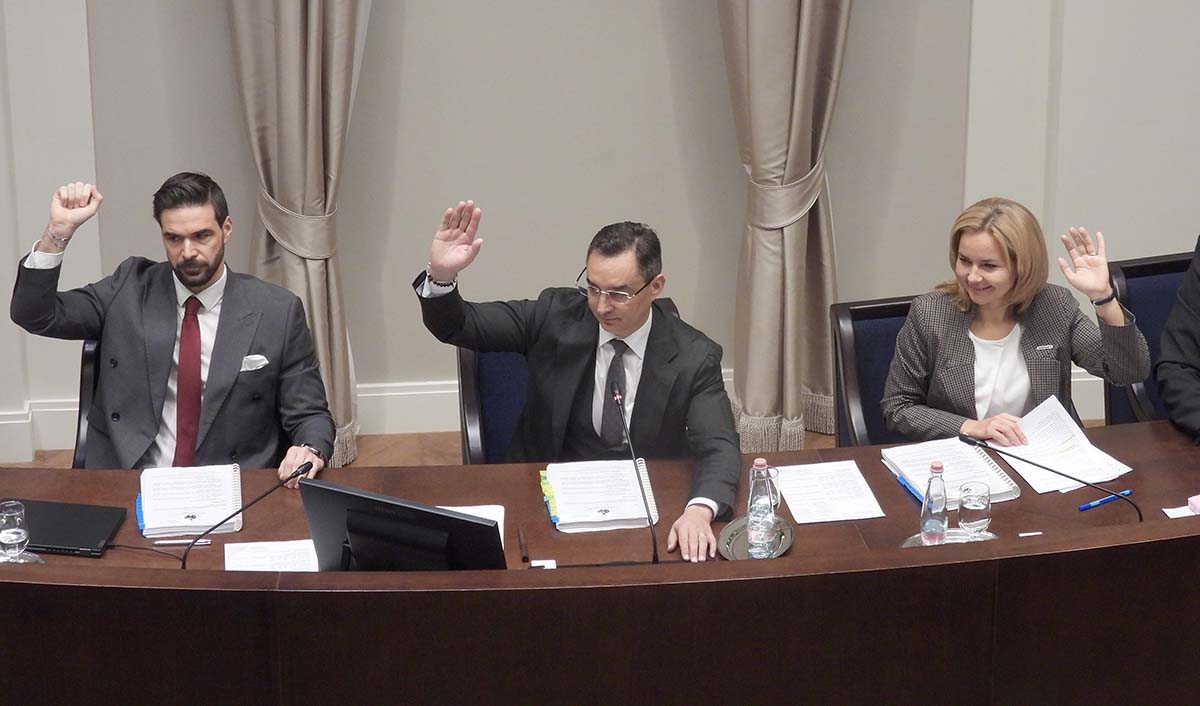
The subsequent roundtable discussion addressed press funding options that would require government decisions, the relationship between political power and the press, and arguments for and against establishing a national press fund.
At the closed-door event, representatives of the relevant ministry, the Media Council, media organisations and national news outlets shared their views.
Proposals to Strengthen Regional and Local Media
We are bringing these proposals into the public domain because, as operators of local newsrooms, we encounter the structural problems facing local public discourse outside Budapest every day. FÜLKE – the Community of Independent Local Newspapers – brings together local news organisations from several Hungarian cities. Our collective experience gives us a perspective that extends beyond the circumstances of any single newsroom.
Through our own work and that of our members, we see the economic, market and regulatory pressures threatening the survival of local journalism. We therefore wish to put forward a number of concrete proposals that we believe deserve serious consideration.
1. Immediate Emergency Support for Local Newsrooms in Crisis
Some local newsrooms have managed to stay in operation over the past sixteen years despite an unfavourable media market, often stretching their resources to the limit. They now lack the financial reserves needed to survive until a new system of press funding is established.
Alongside political change, we are also seeing revenues decline in several areas. Some longstanding supporters are withdrawing, while local subscription and membership models are developing too slowly to sustain a professional newsroom, if they can do so at all. We are already aware of important independent newsrooms that could close as early as October 2026 without adequate transitional support.
We therefore propose a one-off, six-month emergency funding programme. Support should be awarded through a swift, transparent and professionally defensible process, following a brief financial and editorial assessment and direct consultation with the newsroom concerned.
The combined annual budgets of FÜLKE’s member newsrooms amount to approximately HUF 200 million. Targeted funding on a comparable scale could therefore provide six months of bridging support to several important local newsrooms.
This would be a strictly temporary crisis-management measure, designed to prevent professional newsrooms from disappearing before a longer-term press fund can begin operating.
2. Establishing a National Press Fund
Hungary needs a predictable funding system that supports not only individual projects but also the day-to-day operation of newsrooms.
Emergency funding can only provide a temporary solution. In the longer term, we believe it is necessary to establish a press fund that is independent, both professionally and politically, and dedicated to sustaining and developing public-interest journalism.
Existing grant schemes generally fund individual projects, editorial commitments or development activities. Yet the greatest expense for most newsrooms is simply staying in operation: paying journalists and editors, maintaining offices and technology, obtaining legal support, distributing content and building audiences. The fund must therefore provide core operating support as well.
The system should serve several purposes at once: stabilising newsroom operations, financing smaller equipment purchases and technological improvements, and supporting larger editorial, innovation and collaborative projects.
We consider it important that smaller local newsrooms and their networks should not be restricted to a separate regional funding stream. Where appropriate, they should also be eligible to apply for larger grants from the national fund.
The press fund should form one part of a diversified funding system. Based on clear professional criteria, it should help stabilise and develop public-interest journalism without creating dependence on the state.
3. Dedicated Funding for Regional and Local Media
A dedicated funding stream within the national press fund is needed to ensure that smaller local newsrooms are not placed at an inherent disadvantage when competing with larger national media organisations.
Local and regional newsrooms differ fundamentally from national outlets in their scale of operation, revenue opportunities and cost structures. Under a single competitive grant scheme, larger organisations could easily capture a disproportionate share of available resources because they have greater administrative capacity, more experience in applying for grants and stronger institutional support.
We therefore propose a separate funding stream for regional and local media within the national press fund. It should primarily finance operating costs, smaller purchases and measures to stabilise local newsrooms.
At the same time, this dedicated funding must not exclude local newsrooms from larger national grant programmes. Individual newsrooms, as well as networks or consortia of several newsrooms, should be able to apply for funding for more substantial editorial, development or collaborative projects.
The separate funding stream would recognise the different circumstances in which smaller newsrooms operate, allowing them to compete within their own category under conditions and funding levels suited to their size.
This would help ensure that money intended to sustain local public discourse actually reaches the newsrooms providing that service every day in individual towns, districts and regions.
4. Tackling News Deserts
We must protect the local newsrooms that still exist while rebuilding local journalism in areas where it has partly or entirely disappeared.
One of the most important aims of dedicated regional and local funding should be to prevent the further spread of news deserts. In towns and regions where an independent, professional local newsroom still operates, preserving it must be a priority to prevent further deterioration in local public discourse.
At the same time, targeted programmes are needed in areas where meaningful, regular local journalism no longer exists. These should support both the establishment of new independent newsrooms and the geographical expansion of existing local media organisations.
This requires a different approach to funding. We propose drawing partly on the incubation model used in the start-up sector: new local media projects would initially receive financial, professional and organisational development support, helping them gradually reach a point where they can operate independently and sustainably through the regular press fund, commercial revenues, reader contributions and other sources.
There is also room for a more investment-oriented model. A dedicated entity, institutionally separate from the relevant public authority and operating under appropriate safeguards, could acquire temporary minority stakes in new media businesses.
Under a predefined exit strategy, these stakes could later be bought back by the founders, employees or other investors who meet the necessary independence requirements. Successful investments could allow some or all of the public money invested to be recovered, potentially even generating a return that could be reinvested in further local media projects.
An essential condition of any such ownership arrangement is that it must rule out both direct and indirect editorial influence by the state or the relevant public authority.
5. A Rules-Based and Transparent Funding System
Funding decisions must be governed by clear, publicly available and verifiable rules, rather than political considerations or personal connections.
The credibility of the press fund depends on funding decisions being made according to clear criteria established in advance and applied consistently to all applicants.
The system must be accessible to both smaller local newsrooms and larger national media organisations, while taking account of their different sizes and operating circumstances during the assessment process.
The criteria should include original journalistic output, regular coverage of public affairs, actual audience reach at local or national level, editorial independence, transparent ownership and finances, and the expected contribution of the funding to the community and to media pluralism.
Funding decisions, amounts awarded and the reasons behind them must be made public. The use of funds must also be subject to subsequent scrutiny.
The system should not be about selecting favoured newsrooms. It should be about applying predetermined professional criteria consistently, with opportunities available to new entrants as well as established organisations.
6. Involving Global Digital Platforms in Financing Journalism
Global platforms that capture a substantial share of Hungary’s advertising market should also contribute to the sustainability of professional journalism.
One of the fundamental economic problems facing both local and national journalism, in Hungary and internationally, is that a significant proportion of digital advertising expenditure goes to global technology platforms, while the costs of producing the news content they use and distribute are borne by newsrooms.
Several international approaches are worth examining. Austria operates a separate digital advertising tax, while Australia’s regulatory framework encourages major platforms to contribute directly to news media funding. Platforms that fail to reach appropriate agreements with publishers may face additional payment obligations.
Hungary should also develop a system under which at least part of the revenue or contributions collected from major global platforms is channelled back into domestic journalism, providing a stable source of funding for the national press fund.
We consider it particularly important that local and regional media receive a distinct and meaningful share of these resources, as alternative revenue opportunities are especially limited in these markets.
7. Transparency in State and Municipal Media Spending
Everyone should be able to see easily which media outlets receive advertising from publicly funded organisations, how much is spent and for what purpose.
Media spending by central government, local authorities and municipally owned companies has a significant impact, particularly on smaller local media markets.
We therefore propose establishing a single, easily searchable and comparable public register in which these organisations proactively disclose their advertising expenditure.
The register should identify the media outlet receiving the money, the amount spent, the duration and purpose of the advertising, and a brief explanation of the professional or communication criteria behind the choice.
Public institutions should remain free to decide where they advertise. However, media spending financed from public funds must be fully transparent and open to subsequent scrutiny and accountability.
At local level, even relatively small amounts of advertising expenditure can significantly affect how a media market operates. Transparency in this area is therefore an important means of strengthening media pluralism in its own right.
8. Rethinking County-Level Newspapers
We need to examine how county-level newspapers can once again become genuinely local newsrooms and play a significant role in local public life.
The brands, archives, reader relationships and decades of local journalistic tradition associated with the former county daily newspapers represent valuable assets that should not simply be lost.
At the same time, we do not believe their future should be secured by establishing state-owned newspapers, nationalising existing titles or preserving the current ownership structure unchanged.
It is also necessary to examine the ownership, market and regulatory developments that led to the concentration of the county-level press. Where evidence of unlawful conduct, corruption or practices that undermined fair competition emerges, the appropriate legal consequences must follow.
The rebuilding of county-level journalism should primarily be driven by market forces and professional considerations. New entrants, existing local newsrooms and other professional groups should be free to establish county-level or regional media outlets.
Once they have demonstrated their viability and editorial performance, they should have access to the relevant forms of support from the national press fund on the same terms as other newsrooms.
The function and intellectual heritage of county-level journalism should be preserved while creating a more open, competitive and locally rooted media market.
We do not consider a return to the previous structure desirable.
9. Cooperation with Public-Service Media
The knowledge and journalism produced by local newsrooms have genuine public-service value. This should be recognised and put to use through a formal system of cooperation.
Over the past sixteen years, independent local newsrooms have, in many areas, carried out much of the work traditionally associated with public-service journalism.
They have held local authorities to account, monitored the use of public funds, provided space for differing social and political views, and covered local issues that received little or no attention elsewhere.
During the same period, public-service media, many municipally owned media outlets and several nominally commercial local media organisations maintained close ties to the political system then in place.
The expertise accumulated by independent local newsrooms provides a valuable foundation for future cooperation.
Public-service media should establish a system under which they regularly commission or acquire local journalism, reports, background articles and news coverage from independent newsrooms. The volume of work should be predictable, with consistent, performance-based remuneration.
As part of the reorganisation of public-service media and the Hungarian News Agency (MTI), there must also be a professional and ethical review of the roles individuals have played in producing political and public-affairs content, including their involvement in practices that contravened public-service standards.
This is particularly important for positions involving editorial, managerial and reporting responsibilities.
Such a review must establish individual professional responsibility. We reject the principle of collective responsibility. A reformed public-service media system must be built on clear professional and ethical standards.
This approach would both improve the genuine local coverage provided by public-service media and create a new, predictable source of revenue for regional newsrooms.
Preserving editorial independence must, however, be a fundamental condition of cooperation. Such partnerships must not allow interference in editorial content, and the originating newsroom must always be clearly credited for its work.
10. Introducing Digital Radio Broadcasting
Hungary should revisit the introduction of digital terrestrial radio broadcasting, with particular attention to opening the market to local, community and specialist broadcasters.
Hungary previously conducted trials of digital radio broadcasting, but widespread implementation never followed.
The technology nevertheless remains capable of providing new radio broadcasters with a relatively low-cost route into the market while maintaining high broadcast quality. A single digital multiplex can carry several local or regional services.
Data transmission capabilities associated with digital radio could also create further opportunities for distributing editorial content.
We therefore propose a new professional, technological and market assessment to establish the conditions under which digital terrestrial radio broadcasting could be introduced.
As a first step, we recommend launching a local or regional pilot programme involving independent local newsrooms.
In parallel, we believe it is necessary to review the current structure of radio frequency allocations and the circumstances surrounding earlier frequency tenders.
Where unlawful conduct, corruption or practices undermining fair competition in individual cases can be demonstrated, the appropriate legal consequences must follow. Where necessary, the affected broadcasting licence should be put out to tender again.
The objective is to ensure that access to both analogue and digital frequencies is governed by a transparent, competitively neutral system that genuinely supports a pluralistic media market.
11. Media Literacy and Media Education
Efforts to improve media literacy can only have a lasting impact if educational institutions and working newsrooms are involved together.
Media literacy should be treated as a distinct, long-term programme.
Recognising false news is only one aspect of media literacy. Young people and adults also need to understand how news is produced, how sources can be verified, the differences between news, opinion, propaganda and advertising, and why local public discourse and an independent press matter.
This requires cooperation between schools, universities, research institutions and media organisations.
We consider it particularly important that practising journalists and newsrooms take part in designing and delivering these programmes. This would ensure that media literacy is not merely a theoretical subject but a body of knowledge grounded in real editorial experience.
A separate, dedicated funding stream is also needed to support educational programmes, partnerships with schools and universities, newsroom visits, practical training and local media literacy projects.
FÜLKE – Community of Independent Local Newspapers
28 September 2026