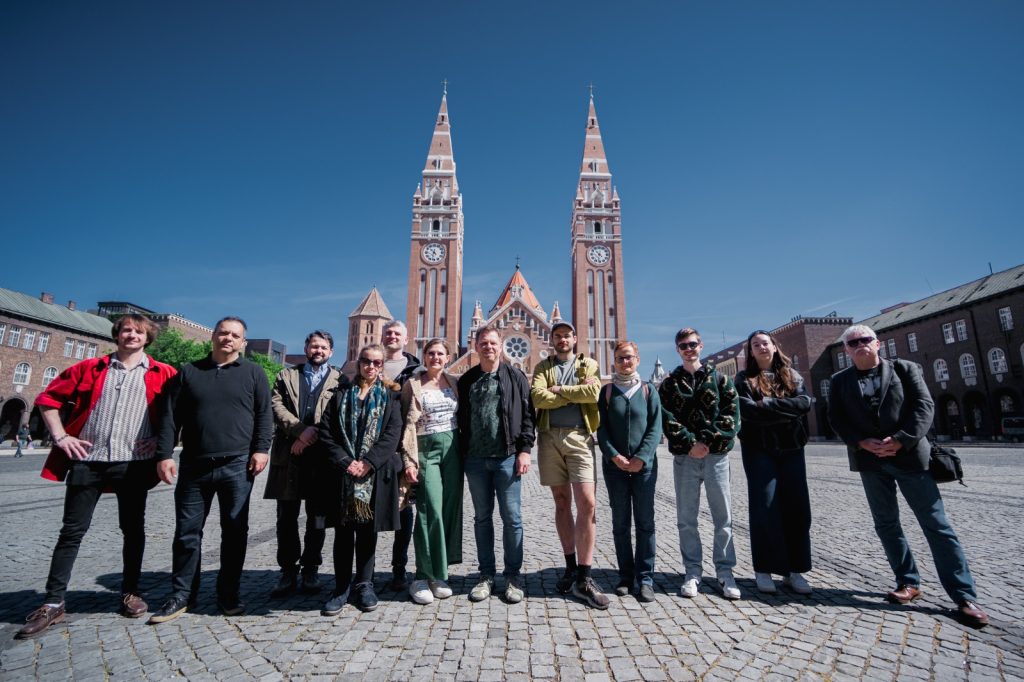
Fülke – the Community of Independent Local Newspapers has developed a comprehensive package of proposals aimed at strengthening local media in Hungary. The document is intended for media professionals, policymakers and bodies dealing with media regulation, press financing and the future of the media. The initiative draws on the day-to-day experience of Fülke’s member newsrooms, whose local media environments are facing economic, market-related and regulatory challenges at the same time.
According to Fülke, the first step should be the introduction of a rapid, six-month transitional support programme for local newsrooms whose continued operation is under immediate threat. In the longer term, a politically and professionally independent national media fund could provide a sustainable solution, supporting not only individual projects but also the ongoing operation of newsrooms. A dedicated funding stream should be reserved for local media within the fund, helping to reduce their competitive disadvantage compared with national media outlets.
Another key objective is to reduce the number of local news deserts. The aim should not only be to preserve existing newsrooms, but also to support the establishment of new local media outlets and the expansion of existing independent local newspapers into areas where regular professional journalism is no longer available. This requires a transparent, rules-based funding system free from political influence.
The proposals also call for global digital platforms to contribute to the financing of journalism in Hungary. At the same time, media spending by the state, municipalities and municipally owned companies should be published in a unified database that is easy to search and allows meaningful comparisons.
The future of county-level media also needs to be reconsidered. According to the document, the local journalistic traditions represented by the former county newspapers are valuable, but rather than simply restoring previous structures, Hungary needs a more open, competitive and locally rooted media market. The proposals also recommend establishing institutional cooperation between public-service media and independent local newsrooms, based on predictable, performance-based remuneration.
The package also proposes putting digital terrestrial radio broadcasting back on the agenda, with particular attention to creating opportunities for local, community-based and thematic broadcasters to enter the market. Another important element is the development of media literacy and media education through cooperation between schools, universities, research institutions and practising newsrooms.
Fülke first sent the proposal package to dr. Gábor Polyák, President of the National Media and Infocommunications Authority (NMHH). In the coming period, the document will also be shared with other media professionals, decision-makers and professional media organisations, so that the proposals can serve as a basis for a broader professional dialogue.
“Our initiative aims to create a media environment in which local journalism can operate on a predictable, transparent and professional basis, while strengthening editorial independence and media pluralism. The Fülke community is ready to discuss the details of these proposals with professional organisations, regulatory authorities and decision-making bodies,” said Róbert Alter, President of Fülke.
The Community of Independent Local Newspapers Association (Független Helyi Lapok Közössége Egyesület, abbreviated as Fülke) is a nationwide professional media organisation that currently brings together six independent local publishers and eight newsrooms. Its mission is to strengthen the diversity of local public discourse, reliable journalism and press freedom. Fülke supports professional cooperation, joint advocacy and knowledge-sharing among its member newsrooms, as well as the sustainable and ethical operation of independent local media.
Fülke’s members are: Borsod24 – Miskolc, Debreciner – Debrecen, KecsUP Hírek – Kecskemét, Szabad Pécs – Pécs, Szabolcs24 – Nyíregyháza, Szegeder – Szeged, Szol24 – Szolnok, and Veszprém Kukac – Veszprém.
Community of Independent Local Newspapers Association
+36 70 945 6091 – Tamás Bethlen
fulke@afulke.hu
Few weeks have been as intense in Hungarian domestic politics as the one that began as September gave way to October. Perhaps not since the election have so many affairs erupted at once: two ministers have been arrested in criminal proceedings launched partly against them. It is no surprise that independent local newsrooms have also reported on major public and political stories, including pieces about the figures most often mentioned in the news. This week’s selection also highlights the Debreciner’s report and video about a Roma group taking action against the increasingly serious spread of drug use.
A comprehensive investigation may begin at Universitas Miskolcinensis Foundation, which maintains the University of Miskolc. In an interview with Borsod24, the foundation’s new chair said they do not want to make judgments based on impressions or press reports, but will also review the previous operation from a financial perspective. The interview covers the foundation’s assets, the limits of university autonomy, expanding student accommodation and modernising buildings.
Read the full article on Borsod24 →
Some residents of Biharnagybajom, a village of 2,400 people, had become so fed up with drug-related crime and street use that they started an anti-drug group made up mainly of Roma residents. Members patrol the village in Hajdú-Bihar every evening. Debreciner journalists visited the settlement and joined the patrol for one night.
Read the report on Debreciner → · Watch the video →
Like many other municipalities, Eger’s budget is now in ruins, and under the current operating model there appears to be no real prospect of consolidation. The city’s mayor has therefore asked the government for extraordinary help. According to an article by egriszin.hu, the municipality’s identity campaign also echoes the governing party’s political messaging.
Read the full article on Egri Szín →
On October 1, the Kecskemét District Court held a closed hearing in the case of Balázs Hankó, interrupted by several breaks. The investigating judge ultimately ordered the former Fidesz culture minister to be held in pre-trial detention for thirty days, citing the risk of flight, concealment and unlawful interference with the proceedings.
Read the full article on KecsUP Hírek →
The political career of KDNP politician Miklós Seszták began in Kisvárda, in Szabolcs-Szatmár-Bereg County. He was an external member of a municipal committee in 1994, became an MP in 2010 and served as minister for national development from 2014. In recent days he was arrested — not yet by a final court ruling — on suspicion of accepting an official bribe in a case connected to Volánbusz worth around HUF 11 billion.
Read more on Szabolcs24 →
Szeged’s drinking-water supply is currently stable, but BYD and the industrial investments planned for the coming years could significantly increase the city’s water demand. The Southern Great Plain has seen a rainfall deficit of 120–150 millimetres this year. The long-term question is therefore not only whether there is enough water now, but also what level of industrial water use can be sustained as the region’s water balance deteriorates.
Read the full article on Szegeder →
Attila Várhegyi has returned to the focus of public life after the current leadership of Duna Media Service announced that it would file a report over problems uncovered in the operation of the public media. The Szol24 article reveals that, according to an internal investigation, the former mayor of Szolnok exerted significant influence over the organisation while serving as an adviser without formal management powers.
Read the full article on Szol24 →
Veszprém closed last year with a record HUF 14 billion in local business tax revenue. This year, however, the city will receive HUF 2.5 billion less than the planned HUF 13 billion from this tax, making a budget amendment necessary.
Read the full report on Veszprém Kukac →
The independent local press looks at empty municipal flats in Eger, a Kecskemét deputy mayor living in a social rental despite earning nearly HUF 3 million, the trap of public works, public funding for organisations in Debrecen, a cracked railway bridge and a volunteer watch being organised at Szolnok railway station.
Borsod24: Szalonna and Bódvaszilas — are Roma families being deliberately moved to Borsod from Slovakia?
The story of a 17-member family that moved from Szepsi to Bódvaszilas has been linked in recent weeks to an earlier plan to move Roma families to Szalonna. The family arrived in early August, after which rumours spread about disorder, noise and other problems. Borsod24 contacted mayor Ákos Kosik to clarify what happened, what complaints had been received and what lay behind the introduction of a local identity-protection decree.
https://borsod24.hu/2026/09/16/felvideki-romak-borsodban-a-szobeszed-mossa-ossze-a-szalonnai-es-bodvaszilasi-torteneteket-alaptalanul/
Debreciner: The government and municipality gave hundreds of millions to Debrecen organisations supporting Fidesz politics
One organisation linked to the Debrecen city administration received more than half a billion forints from the municipality in just a few years. Presenting itself as a green movement, it never spoke out about the environmental harm of battery-industry investments in the city. After the government reformed the central public-data register, Debreciner checked again the groups that had openly supported the Fidesz mayor and the public money they received.
https://debreciner.hu/cikk/eveken-at-juttatott-szazmilliokat-a-fidesz
Egri Szín: Eger’s squandered social-housing system
The city has 800 rental flats, but only 30 are genuinely social homes. One hundred stand empty while 200 people are waiting for housing. Rental contracts have practically stopped for years, even as the municipality sells empty flats at an accelerating pace. Meanwhile, better-off people rent municipal properties for a few tens of thousands of forints a month. Everyone involved shifts the blame elsewhere, writes egriszin.hu.
https://www.egriszin.hu/tartalom/cikk/13479_elherdalt_berlakasrendszer_egerben
KecsUP Hírek: Fidesz deputy mayor lives in a social rental flat despite earning nearly HUF 3 million
During a break in the Kecskemét city council meeting on September 24, three opposition representatives held a press conference. They said that although deputy mayor Gábor Fekete earns nearly HUF 3 million a month, plus benefits and a company car, he lives in a social rental flat in the city centre. Fekete responded that his grandfather and later his mother had lived there. The opposition called on him to resign, but he did not do so.
https://kecsup.hu/2026/09/tobb-millios-fizetessel-szocialis-berlakasban-lakik-a-fideszes-alpolgarmester-a-lemondasat-kovetelik
Photo: KecsUP
Szabolcs24: Trapped in public works in eastern Hungary
Szabolcs-Szatmár-Bereg had the most public workers in February 2026: 15,600 people. Public works remain an important source of income in many settlements, while moving to the primary labour market is made difficult by low educational attainment, poor transport and the challenges of commuting. Many people who leave the programme eventually return to it.
https://szabolcs24.hu/2026/09/25/het-osztallyal-sehol-nem-allnak-velem-szoba-mi-tart-bent-ezreket-a-kozmunkaban-szabolcsban/
Szegeder: A structural element of the railway bridge at Algyő has cracked
During a routine inspection, MÁV found a crack in a cross-bracing element of the Algyő railway bridge over the Tisza, so the speed limit was reduced from 100 to 60 km/h. The restriction affects the Szeged–Hódmezővásárhely tram-train and services on the Szeged–Békéscsaba line, although the railway company says it has not yet disrupted the timetable.
https://szegeder.hu/regio/2026-09-20/megrepedt-az-algyoi-vasuti-hid-szerkezeti-eleme-100-km-ora-helyett-csak-60-nal-jar-a-tram-train/
Szol24: Volunteers are organising a watch at Szolnok railway station
A volunteer watch is being organised to monitor Szolnok railway station and its surroundings, but the legal framework of the initiative is not yet clear. Szol24 asked the police under what conditions such a service could operate and what role the police could play. The authorities said they knew about the initiative but were not involved in organising it.
https://szol24.hu/2026/09/24/sajat-figyeloszolgalatot-szerveznek-a-szolnoki-vasutallomashoz-megerkezett-a-rendorseg-allasfoglalasa/
Veszprém Kukac: The examination room at Veszprém hospital’s ophthalmology department is being renovated
Renovation has begun at the ophthalmology department of Csolnoky Ferenc Hospital in Veszprém. The existing conditions had become outdated in the open-plan examination room and did not ensure patients’ comfort or privacy during doctor–patient meetings. Careful planning preceded the project because the floor area cannot be expanded.
https://veszpremkukac.hu/csolnoky-ferenc-korhaz-megujul-a-szemeszeti-osztaly-vizsgaloja_unikum/
Debrecen’s EcoPro cathode factory public hearing ended in scandal. Chinese workers and bunk beds were found in a former Szeged restaurant that is not suitable for accommodation. Veszprém Kukac sent questions to the city’s mayor about the renovation of the Petőfi Theatre — and received answers.
Borsod24: Bronze Age graves preserve the memory of thousands of years of history in Bükkábrány
Nearly two hundred graves from a Bronze Age cemetery uncovered in the area of the Bükkábrány lignite mine offer a rare glimpse into the lives of communities that lived thousands of years ago. Archaeologists from the Herman Ottó Museum are also examining what the finds reveal about the people who once lived there.
https://borsod24.hu/2026/09/11/kiraboltak-a-sirok-85-szazalekat-megis-maradtak-kincsek-bukkabranyban/
Debreciner: The public hearing on the EcoPro cathode factory in Debrecen ended in scandal
Why were residents threatened at the Debrecen public hearing? Why did the political elite linked to the city fail to appear? And why was one of EcoPro’s factory buildings closed two days later? Debreciner journalists looked for answers in their Térkő podcast.
https://debreciner.hu/cikk/botranyba-fulladt-az-ecopro-katodgyar-kozmeghallgatasa-debrecenben-terko-15
Egri Szín: Cultural decline will be difficult to reverse
The new theatre management had to face the fact that decades of cultural nihilism had practically emptied the auditorium. According to Egri Szín, an audience that enjoys the arts does not simply appear: it has to grow up, and it can also disappear.
https://www.egriszin.hu/tartalom/cikk/13464_szelhamos_egerben
KecsUP Hírek: The previously uncovered stand at Kecskemét’s football stadium now has a roof
The renovation of Széktói Stadium cost HUF 700 million, 70 percent of it from TAO funds. Covering the stand on the side facing the city centre was the most visible element of the project.
https://kecsup.hu/2026/09/atadtak-a-szektoi-stadion-napos-oldalat-szombaton-a-szurkolok-is-birtokba-vehetik-galeriaval
Szabolcs24: The population of Szabolcs-Szatmár-Bereg is shrinking faster than the national average
More than 41,000 fewer people live in the county than ten years ago, while the number of working-age residents fell by more than 50,000 and the number of people over 65 grew by nearly 15,000. The analysis also looks at the settlements where the population decline was greatest.
https://szabolcs24.hu/2026/09/18/41-ezerrel-kevesebben-elnek-szabolcsban-mint-tiz-eve-a-varosok-kozul-csak-egy-tudott-noni/
Szegeder: The former Blue Star restaurant almost became a workers’ hostel
An inspection found 37 bunk beds and ten Chinese citizens in the closed Szeged restaurant. The county government office identified fire-safety deficiencies and established that the property, in its current condition, was not suitable for accommodation.
https://szegeder.hu/szeged/2026-09-14/kinai-munkasokat-es-emeletes-agyakat-talaltak-egy-volt-szegedi-etteremben-pedig-a-hely-szallasnak-nem-alkalmas/
Szol24: One fewer member in the Szolnok Fidesz group
Gyula Menkó left the Fidesz–KDNP municipal group and will continue as an independent representative. His departure means the governing-party group has lost its previous automatic majority in the Szolnok assembly.
https://szol24.hu/2026/09/16/menko-gyula-elmondta-miert-hagyta-ott-a-fidesz-kdnp-frakciot/
Veszprém Kukac: Questions and answers about the renovation of the Petőfi Theatre
Because of anomalies surrounding the investment, Veszprém Kukac sent several questions to mayor Gyula Porga and then published the reply in full.
https://veszpremkukac.hu/gigaberuhazas-kerdesek-es-valaszok-a-petofi-szinhaz-felujitasaval-kapcsolatosan/
A HUF 250 million consulting contract in Kecskemét, a Fidesz–Tisza meeting in Eger, continuing battery-industry controversies in Debrecen, plans for Penészlek, the question of whether Hungarians will profit from the Chinese BYD factory, a shortage of GPs in Szolnok and soaring rents in Veszprém — a selection from last week’s reporting by independent local online newspapers.
Juhász Roland, the Tisza Party’s politician in Miskolc, explains why he previously avoided press attention and why he now felt it important to speak. In his interview with Borsod24 he discusses the situation in Miskolc, recent discontent and conflicts inside the party. He also talks about possible new MPs, voting discipline and individual conscience, the importance of accountability, Miskolc’s most urgent problems, his relationship with a fellow representative and political responsibility after the election.
After more than three and a half years, a public hearing about battery projects was held in Debrecen. Concerned and angry residents found the government office more interested in disciplining them than in giving meaningful answers. The Mikepércs Mothers group says the factory permit should be reviewed because of earlier legal violations. Debreciner published a detailed video report.
Eger mayor Ákos Vágner (Fidesz) and state secretary Péter Bódis (Tisza) met recently and held lengthy talks. They issued separate statements, but both presented themselves as responsible decision-makers. The report looks at what was discussed, the contrasting tone of the two accounts and what it means for a city government and a national politician to negotiate in this way.
Over the past few years, Ágnes Csapó, a municipal chief adviser appointed by Fidesz mayor Klaudia Szemereyné Pataki, allegedly gave advice and instructions to the city hall and municipal companies in exchange for a quarter of a billion forints in public money, reportedly from Madeira. Opposition representative József Király filed a complaint on suspicion of negligent or unfaithful management and shared the documents obtained through a public-data request with KecsUP Hírek.
Photo: KecsUP Hírek
Szabolcs24 asked mayor Péter Bíró how the village is responding to Partizán’s new eastern-Hungary base and what the community of just over a thousand people might gain from it. A studio and podcast and video workshop are being created in a former medical clinic that has stood empty for ten years. The mayor says the most important benefit could be national attention for Penészlek, its values, history and residents.
BYD has spoken from the beginning about building a local supplier chain, but will Hungarian companies really profit, or remain at a lower level? Szegeder investigates. Although BYD cited business secrecy and gave no details, the national investment agency confirmed that at least 24 companies are already cooperating with the factory. One company from Győr also shared its experience.
Photo: András Bálint / Szegeder
The city’s 13th adult GP district, vacant for seven years, ended on September 1. Around 1,560 residents were redistributed between practices 24 and 26, although free choice of doctor means not everyone is automatically assigned to the new district. Doctors say the higher patient numbers are a serious burden, especially for older and chronically ill people.
The housing-search season has begun and students are looking for affordable flats in Veszprém. A small one-room flat can now cost HUF 140,000–150,000 a month, while larger or better-located homes commonly cost HUF 200,000. Fresh listings include flats advertised for HUF 250,000–300,000 a month.
A factory standing empty despite billions in subsidies, endangered city bus services, a state secretary calling for solidarity, safer streets in Kecskemét, a fatal workplace accident in Szeged, a new political initiative in Veszprém — and the story of how electric street lighting, Túró Rudi and local pride are connected in Mátészalka. This week’s selection from the Független Helyi Lapok Community brings local stories behind the national headlines closer through the work of seven newsrooms.
More than a thousand people signed an online petition in two days calling for meaningful improvements to public safety in Kecskemét. The initiator lists open drug use, begging, the poor condition of public spaces, night-time disorder and property crime among the most pressing problems. Signatories ask the municipality and law-enforcement agencies to increase the walking presence of police and city wardens in critical districts, and to close and regularly inspect playgrounds.
At Mátészalka’s Fényes Days, one member of the Bruno x Spacc duo learned from the mayor how closely the Pöttyös Túró Rudi brand is tied to the town. Behind the entertaining scene are two pieces of local history: electric street lighting was switched on in Mátészalka in 1888, and the sweet has been produced there for almost six decades. The article shows how electric light became a city celebration and Túró Rudi a source of livelihoods and a symbol of local pride.
Work was under way at the Szeged government office on Tuesday when an industrial climber fell onto the roof of the Vármegye Restaurant and died. The fall may have been at least 15 metres. Police told Szegeder that the cause is unknown and have opened an investigation into suspected endangerment committed in the course of employment.
A fruit-processing plant built with HUF 1.7 billion in EU support is still unused and is now being auctioned for HUF 600 million, Szol24 reports. The investor is under liquidation and its managing director and a business partner were registered at the same Dubai address. The buildings are subject to a mortgage of nearly HUF 1.7 billion held by a company linked to Indotek.
Solidarity, not stigmatisation, is needed, Kinga Szabó-Tóth told Borsod24 in a video interview about the crisis in social care. Staff shortages, overcrowded institutions and workers forced to take several jobs characterise the sector. The interview also examines the state’s and society’s responsibility for helping people in vulnerable situations.
Tibor Navracsics announced a civic initiative called Civil Democrats to encourage dialogue about Hungary’s future. In an ATV studio discussion he said nobody has to reveal their party preference, only their opinion. Veszprém Kukac looks at the politician’s three decades in public positions and his role in the city’s story.
Before the council meeting, Eger’s Fidesz mayor Ákos Vágner announced that the city’s operation was in danger and asked the government for roughly HUF 800 million in immediate aid because it could no longer finance public transport. The article examines the city’s finances, the cost of the mayor’s office and the political pressure behind the request.
The Booth nominates Alter Róbert, president of the Community of Independent Local Papers (The Booth), as a member of the Independent Public Media Council. Our community decided to put forward its own candidate because we consider it essential that the perspectives of people living outside Budapest receive real weight in the operation and oversight of a renewed public media system.
Eighty percent of Hungary’s population lives outside the capital, yet their reality appears in the national media only occasionally. In our view, public media must serve the whole country: it must regularly and credibly present the life, problems, achievements and diversity of rural and local Hungary.
Alongside impartial and comprehensive information, restoring public trust requires measurable public-service performance, transparent selection of leaders and accountable financial management.
“I do not want to represent a single city or region. I will make sure that the perspective of local Hungary is not absent from the council’s work for a single moment. I will be the voice, eyes and ears of rural Hungary so that public media truly serves the whole country,” said Alter Róbert.
The Independent Public Media Council exercises ownership and supervisory rights over public-service media companies. Its task is not to determine editorial content, but to monitor the fulfilment of public-service objectives, protect editorial independence, select leaders and supervisory bodies, and oversee financial management and high-value commitments.
The Booth firmly believes that managing public media funded by public money carries exceptional responsibility. Overlapping structures must be identified, measurable objectives must be set, and high-value contracts must be subject to strict oversight. Transparent cooperation with local newsrooms could simultaneously improve the territorial coverage of public media across the country, the quality of information and the efficiency of public spending.
Community of Independent Local Papers Association
fulke@afulke.hu
+36 70 945 6091 – Tamás Bethlen
Alter Róbert has worked in local media for approximately twenty-five years. He is co-founder and managing director of KecsUP Hírek and president of The Booth, which brings together six publishers and eight newsrooms. He previously served on the supervisory board of Kecskeméti Televízió Nonprofit Kft. and was chair of the supervisory board of Kecskeméti TISZK Nonprofit Kft. He holds degrees in engineering and economics and engineering informatics, as well as a certified accountant qualification; as a company director and financial manager, he also has extensive experience.
The Community of Independent Local Papers Association, or The Booth, is a national professional media organisation currently bringing together six independent local publishers and eight newsrooms. Its aim is to strengthen the diversity of local public life, reliable information and press freedom. The Booth supports professional cooperation, collective representation and knowledge sharing among its member newsrooms, as well as the sustainable and ethical operation of independent local media. The members of The Booth are: Borsod24 – Miskolc, Debreciner – Debrecen, KecsUP Hírek – Kecskemét, Szabad Pécs – Pécs, Szabolcs24 – Nyíregyháza, Szegeder – Szeged, Szol24 – Szolnok and Veszprém Kukac – Veszprém.
The new Hungarian parliament has amended the Media Act at the initiative of the Tisza Party. In line with a campaign promise by Péter Magyar and his party, the heads of the offices and authorities that have so far governed and regulated the Hungarian media will be recalled, and their successors will be selected through open calls. MTVA and Duna Media Service will be abolished and replaced by new organisations.
The newly established Independent Public Media Council will oversee the independence and financial management of public media. The amendments also establish a Press Fund to support independent Hungarian media.
The Community of Independent Local Papers (The Booth), which currently brings together six rural publishers and eight newsrooms in Hungary, welcomes the changes, their aims and direction. At the same time, we believe that journalism in rural Hungary, and the role and operation of independent local media, cannot be ignored. We therefore issue the following statement.
For the first time in sixteen years, we have an opportunity to discuss not only the operation of state-funded public media but also the condition of Hungary’s entire public sphere, of which the press of rural Hungary is a crucial part. Journalism in rural Hungary is in crisis in several respects. There are hardly any communities where residents have full access to the reliable, comprehensive news and information that sustain local democracy. In other words, the overwhelming majority of Hungarian society lives in news deserts. This crisis is the result of several factors acting together.
These include the crisis of traditional news media and the disappearance of local news channels, which has dismantled market diversity; the brutal political intervention in news production; the systematic spread of state disinformation; the extreme centralisation of local media funding and its control on party-political grounds; and the use of municipal media as a propaganda service, as we have experienced during the sixteen years of the NER.
The crisis of journalism is particularly serious because, apart from the eight to ten county-seat cities where members of The Booth are present, and a few other smaller and larger towns where an independent local paper or an uncompromising freelance journalist or correspondent still operates, the disappearance of journalistic investigation and reporting has led to a complete loss of oversight over local institutions and local politics, including municipalities, public institutions, local businesses and political parties.
When there is no one to ask questions, investigate what happens to public money or present different opinions, local public life gradually becomes opaque. That is exactly what has happened over the past sixteen years. The consequences are also deeper and social in nature: trust in the media in Hungary has fallen to the lowest level in the European Union, a direct consequence of centrally managed informational chaos. In this situation, it is particularly important that the Media and Mass Communications Act adopted today is concerned not only with the operation of public media but also with the challenges facing the local press.
Today, Hungary has barely a dozen independent local newsrooms with their own journalists and publishers. They include the members of The Booth: Borsod24 in Miskolc, Debreciner, KecsUP Hírek in Kecskemét, Szabad Pécs, Szabolcs24 in Nyíregyháza, Szegeder, Szol24 in Szolnok and Veszprém Kukac. Since the Fülke association was founded in 2025, we have been working together to find solutions for building a sustainable local media model in the long term, while continuously developing together.
As small newsrooms, we have survived the past period with enormous difficulty, while the NER eliminated the free advertising market and wiped out the domestic grant opportunities available to critical journalism. We have therefore financed our basic operations primarily through international grants, supplemented to a lesser extent by local community support and subscription systems, and only marginally by market revenues.
In figures: the combined 2025 budget of the eight newsrooms belonging to The Booth barely approaches HUF 200 million. This funds the work of journalists, the small support teams of the publishers and the technical infrastructure essential for operations, even though some newsrooms do not have an office. Yet the current one-sided funding model is no longer sustainable for our continued operation. Our basic operations are not secured even for 2026.
The next generation of journalists is also an unresolved issue, because in such uncertain circumstances fewer and fewer people choose journalism as a profession. Taking all this into account, and despite all the difficulties we have faced, we still reach around 2.5 million people every month directly through our online platforms.
The law passed today speaks about media pluralism, press freedom and independent media. Its explanatory memorandum specifically highlights that the Press Fund will support media outlets producing reliable content and ethical journalism, traditional media services with limited resources, and print and electronic content providers. The law is therefore an important step towards transforming the media system, but from a local perspective it has several important shortcomings.
It contains no separate programme or earmarked funding for the local and regional press, creating a risk that support will primarily go to larger, stronger national players. Nor does it address the problem of news deserts: regions where no independent local media remains and only party propaganda maintained from municipal sources is available, or even that is absent. It can also be read as indicating that the funding system may focus primarily on project financing, while the greatest difficulty for rural newsrooms is often maintaining basic operations, from journalists’ salaries to infrastructure costs.
It remains an open question whether grant evaluations will be public, whether legal remedies will be available and what safeguards will prevent future political or institutional influence. If the genuine aim is to create media pluralism, we must also consider separately the situation of journalism in rural Hungary, which is in crisis.
International examples show that workable models exist. In the Nordic countries, one of the main aims of press-support systems is to sustain outlets that are weaker in the market but important for political and regional diversity because they provide public-interest content. The French model additionally supports research and development to meet the challenges of the digital and ecological transitions, as well as the emergence and support of new players. Austria also operates a press-support system regulated by law, whose goals include not only diversity but also journalist training and encouraging reading. In European countries with such public funds, one criterion for awarding support is precisely the extent to which a newsroom contributes to the diversity of local public life and the functioning of democratic public discourse.
The Booth can be a strong, independent and organised channel to rural public life, committed to reliable information, access to news and professional standards. We are therefore ready to take part as partners in the public debate on renewing media services.
As independent newsrooms, we possess practical knowledge of the obstacles facing local journalism, the resources needed for our work and the conditions required to operate sustainable, public-interest local media in the long term.
We support promoting pluralism of opinion, democratic public discourse and the rule of law. We also support applying all the principles set out in the Public Service Charter at local level, including action against fake news and disinformation, factual and wide-ranging reporting, and the promotion of ethical and independent journalism.
We are partners in and have a stake in the smooth functioning of the communications market, the protection of the interests of communications providers and users, and the development of fair and effective competition. We also want to help establish a transparent grant system from the Press Fund for press outlets operating in rural Hungary, based on the standards of ethical journalism.
In our view, the current post-2010 reform of public media cannot end with a merely central institutional reorganisation. One of the most important measures of democratic change will be whether the conditions can be created for media outlets providing reliable information and ethical journalism to operate in the towns and regions where genuine media pluralism has disappeared or been severely weakened over the past fifteen years.
Signatories: Borsod24 in Miskolc, Debreciner, KecsUP Hírek in Kecskemét, Szabad Pécs, Szabolcs24 in Nyíregyháza, Szegeder, Szol24 in Szolnok and Veszprém Kukac
“As members of the KecsUP Hírek team, we believe in democracy and freedom of expression, and in our responsibility to inform the public about the most important events and decisions affecting the city of Kecskemét. We believe in our power to build community and to provide real value to our readers and followers through our content. KecsUP is currently the local news outlet that operates without using a single forint of public money, and whose independent, modern and distinctive content presents life in the region,” we wrote earlier, when we reported on the major changes expected in the life of KecsUP Hírek. We continue our work with the same conviction now that KecsUP is moving to a subscription model. Before presenting the details to our readers, let us take a brief look at KecsUP’s journey.
Seven years ago, a dream became a goal: Kecskemét should finally have an independent, honest voice in public life, because accurate and understandable information about local affairs is not a luxury but a basic need. The idea came from Róbert Alter, who was first joined by Dr Norbert Falusi. Over the years, an editorial community took shape whose determination to pursue this mission has only grown stronger despite every obstacle.
In recent weeks, our colleagues selected several topics from among the many important issues they have covered — subjects that required more work than average and that summarise their approach and insights. István Hraskó examined the NJEA case worth HUF 127.5 billion. Balázs Latyák looked beyond Kecskemét’s borders to present the critical situation of drinking water in Nagykőrös. We learned Imre Barna’s thoughts on the undeniable power of publicity, while Norbert Falusi highlighted our outstanding role in democratising the public agenda. Szilárd Balla shed light on the importance of truthful information through the relationship between facts, emotions and propaganda. Olga Alter also reported on how difficult it is to maintain the financial foundations of a newsroom, while Róbert Alter, the managing director of the paper, shared his view of KecsUP’s life.
Through these behind-the-scenes articles, we sought to bring the KecsUP community closer to the “invisible” work behind the content and to the value-creating nature of journalism as a profession.
Over the years, it has become increasingly clear that there is a real demand in and around Kecskemét for objective and thorough coverage of issues that affect our lives. Evidence includes our steadily growing readership, the many interactions, comments and letters from readers, and, last but not least, the social impact created by our content.
But we wanted to know even more. For months, we surveyed our readers to learn what truly interests them, what deserves our closer attention and how we can better serve an audience that values real news. This was part of a joint experiment in which we sought to shape the details of the subscription system based on our experience and the feedback we received.
Can you imagine how much time, work and money lie behind Norbert Falusi’s and István Hraskó’s videos about water retention and water monitoring? Several trips, fieldwork, background conversations, interviews, research to find information, hundreds of photographs and cutaway shots, from which the best material is selected over many hours. Then comes the script, the careful editing of the material by a professional editor, and several rounds of review.
Next comes writing and recording the narration, inserting it into the film and adding subtitles. Only after all this can the result of several weeks of work — the finished film — be published.
Our goal is to continue investigating important topics such as the NJEA case, which require meticulous follow-up, repeated checks, research and data collection. We can only see clearly when someone delves into an issue, untangles the threads and makes it accessible to readers.
In our Peremhelyzetek section, KecsUP also seeks to present the lives and problems of people pushed to the margins, along with possible solutions. Our journalists regularly visit in person people who have no “voice” with which to communicate that they exist at all. Through us, readers can learn about often urgent problems and tragic or dramatic human stories.
Staff members of the national press are increasingly interested in these topics as well. They know that important events, stories and situations exist in rural areas just as they do in the capital, but they can access real information and amplify it nationally only through us.
It is important to emphasise that KecsUP Hírek will continue to report the news. We are not depriving anyone of the right to free access to information. Accordingly, a significant part of our articles will remain available to the wider public, and some of our subscription articles will also remain public for everyone.
The straightforward answer is that government influence under the Orbán administration has completely shut us, as an independent local medium, out of the advertising market. But even if an advertising market existed, the premium-quality journalism we represent simply could not be produced from advertising revenue alone.
The world of grants is just as uncertain as a dog’s dinner: we cannot know whether a call will be issued that fits our aims, and it is always a question whether evaluators will consider an application developed through so much work worthy of support. In short, subscriptions are what make KecsUP’s operation sustainable. Our content has always been free from all outside influence; we now want to establish our business independence as well.
Premium content — articles, videos and podcasts — created with substantial journalistic added value and investment will be available to subscribers. They will also be able to read it with fewer pop-up advertisements.
Annual subscribers will be able to buy tickets to one of our KecsUP Evening events, which have deservedly become popular, at a 50 percent discount. They will have access to our exclusive weekly newsletter, written by the editor on duty that week in their own style and with their personal perspective woven into the most important news, events and developments of the week.
A subscription can also be started with a monthly package, so anyone can try out the benefits of membership. The annual subscription will, however, be available on much more favourable terms than the package renewed every month.
We are also working on a new community support system that will allow our readers to provide access to KecsUP content for others as well. The Aspektus+ programme is supporting the implementation of this development, so the value of contributions received for it will be doubled.
Quality content deserves a special presentation. After a long process of planning and rethinking, made possible by the support of our readers, our long-awaited new, user-friendly website has finally launched. We sincerely hope that whatever news our audience reads, they can do so with pleasure on this easy-to-use, transparent and clean platform.
We sincerely believe that the freedom of the people cannot exist without a free press. True freedom cannot exist without truthful words either, and there will always be a need for people brave enough to ask questions, investigate carefully and present the facts to readers, even when the truth often hurts.
Anyone who agrees with all this and would like to join the KecsUP community on this journey can subscribe. We will remain credible, free and independent!
We have one month left to secure the financial future of our newsroom. 1,500 subscribers can save the Debreciner. If we cannot win new subscribers and supporters, our editorial team will be forced to stop its work.
It is not our topics that have run out. Nor our determination.
Our financial reserves have run out.
Operating the Debreciner costs HUF 3 million a month. That is a modest budget for a small newsroom: few staff members, low salaries and careful spending.
Support from 1,500 subscribers paying HUF 2,000 a month would be enough to keep us going.
Since 2019, we have worked to ensure that Debrecen and the region have independent local journalism free from party propaganda. We have brought public attention to many issues that would have remained invisible without the Debreciner. We have shown the stories of local communities, families and people. We asked questions even when those responsible did not answer. We followed stories when others remained silent.
Our articles have regularly been republished and discussed by the national press. The Debreciner has become known beyond Debrecen as a credible local newspaper working to high professional standards.

Now, however, we cannot continue without support from our readers. There are no new grant opportunities available to us, and the local advertising market has not opened up for us — nor do we want to come under the influence of political parties, business interest groups or wealthy patrons. That is why we are turning to you.
Subscribe to the Debreciner! Support our work with a regular or one-time donation! If you run a business, advertise with us!
No one else will do the work of rural and local independent journalism. If the Debreciner falls silent, public life in Debrecen and the region will become poorer. Fewer issues will come to light. Those who make decisions about us will face far fewer questions.
We have stood firm for the past seven years. Now it is up to you whether we can continue.
Help save the Debreciner!